
This would be different a little bit
I’m sure you will find some thoughts here that are spiritual , it will guide you when you need it
you will never be lost
page one translated

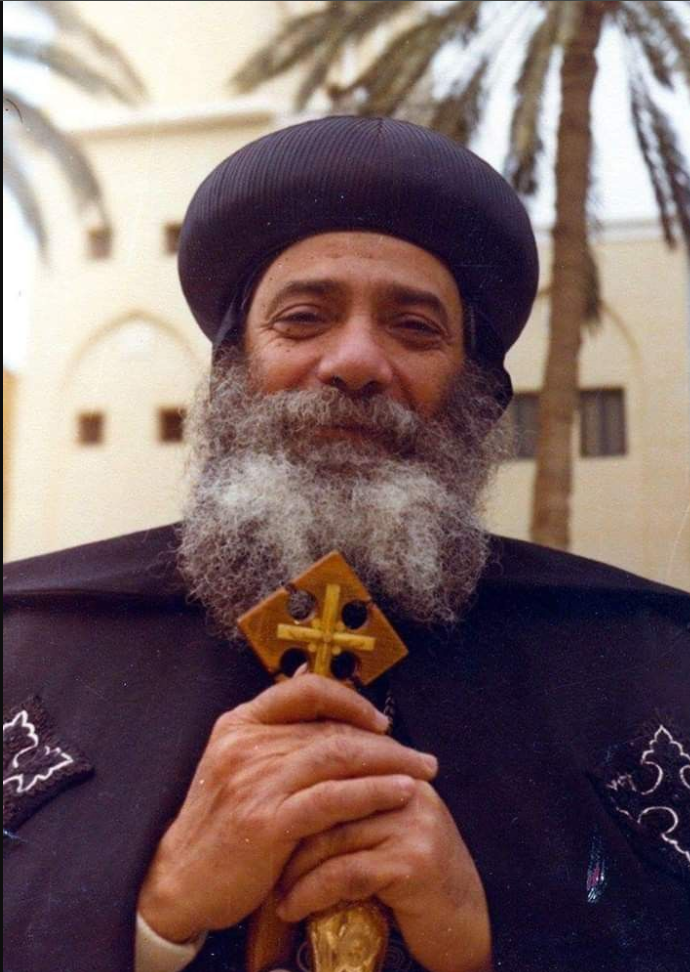
(0:00:32) The Lord Christ began by commending this person for his positive qualities before speaking to him about his shortcomings. He said to him, “I know your works; I know the good things you possess. I know your works, your toil, and your patience.”
(0:00:59) “You have endured, you have persevered, and you have labored for the sake of My name, and you have not grown weary.” Yet—and here He addresses the negative aspect—He first speaks of the positive side. It is as if to say, “I will not withhold from you the opportunity to defend yourself and to acknowledge your virtues. I will state them to you upfront: I know your works, your toil, and your patience; you have endured…”
(0:01:29) “…you have persevered, and you have labored for the sake of My name, and you have not grown weary. But I have this against you: that you have left your first love.” You no longer love Me as you once did. Perhaps you love the service itself—you toil for the sake of God and you endure—but your love for Me is not what it used to be.
(0:01:57) What do you gain if you perform every good deed, yet possess no love? Suppose you have toiled for the sake of the Lord and have not grown weary, yet you lack love—what, then, have you truly gained? There are people who toil earnestly for God’s sake, yet possess no love—neither for God nor for their fellow human beings.
(0:02:22) There are those who toil in Sunday School ministry, who labor in various church societies, who serve on church committees, who exert themselves in the priesthood, and who dedicate themselves to ministry—yet they lack love. The Apostle Paul declares: “Though I speak with the tongues of men and of angels, but have not love, I am nothing.” What is the benefit of all this toil if, in the process, you lose your very soul?
(0:02:53) What does it profit a man if he gains the whole world, yet loses his own soul? It is true: you possess toil, you possess patience, and you possess endurance; you have labored for the sake of My name and have not grown weary. Yet, I desire love above all else. “I have this against you: that…”
(0:03:22) “…you have left your first love.” Perhaps the service has consumed you; perhaps the work itself—the constant running to and fro, the ceaseless activity—has become your sole preoccupation. He works in social ministry, reaching out to the poor with tireless energy—working ceaselessly—examining their circumstances and assessing their needs, just as it is written.
(0:03:51) Yet, despite all this, that “first love” is missing. Perhaps he has transformed from a true servant into a mere social worker; and from a social worker, he has devolved into someone who grows cynical toward the poor—especially those he suspects of being deceitful. Little by little, he finds that he has lost his connection with God, and he has lost the true essence of his ministry. “I have this against you: that you have left your first love; it is no longer as it used to be.”
(0:04:21) There is another type of person—someone who, the moment he enters into a relationship with God, burns with a fiery zeal. He is a soul ablaze with passion the moment he embarks on his journey with the Lord—filled with intense enthusiasm.
(0:04:43) He is meticulous in his spiritual life and deeply devoted to the various means of grace—reading, prayer, meditation, fasting, and so forth. He is sensitive to his relationship with God; his eyes are often brimming with tears, and his heart burns with love. But after a while, he begins to grow cold—colder and colder—until his life with God settles into a mere routine.
(0:05:13) And God says to him: “I have this against you: that you have left your first love; it is no longer as it used to be. You love Me, but not with the same intensity as before. You labor for My sake, but it is not the labor of love. You toil for Me, yet it lacks the true essence of love.” Indeed, there are those who labor in God’s service, but their effort is devoid of love. For some, religion is nothing more than an activity—
(0:05:43) merely one activity among many others—but it is not love. So God says: “I know. I know your running, your striving, and your toil—but there is no love in it. It is an effort that yields no true fruit. I have this against you: that you have left your first love. Therefore, remember from where you have fallen, and repent.”
(0:06:11) The phrase, “Remember from where you have fallen, and repent,” is perhaps a somewhat novel concept. One might typically assume that a “fallen person” refers only to someone who has succumbed to a specific sin—such as adultery, theft, or some other transgression. Sin is indeed sin—even the sin of injustice; this is what is typically regarded as a “fall.”
(0:06:35) However, God considers the act of forsaking your “first love” to be a fall—and He deems this something that requires repentance. It is not merely the act of stumbling, or being swept away and drifting into sin; simply abandoning your first love constitutes a fall, and it demands repentance. It is indeed a fall, and it requires repentance.
(0:06:58) Hence, the saints used to pray and implore God to restore them, saying to Him: “O Lord, restore me, that I may repent.” Restore me—from what, exactly? He has a grievance against you—not that you lack love entirely, but that your love is no longer as it once was. My charge against you is that you have forsaken your first love. It is true that you still recite the Psalms, but not as you did in the past. Back then, your recitation of the Psalms was filled with reverence;
(0:07:29) it was filled with tears, with fervor, and with a spirit of brokenness. Your Psalms were profound; you would speak the Word with a heart ablaze. But now, you recite the Psalms, yet you worship Me only with your lips. My charge against you is that you have forsaken your first love.
(0:07:58) In the past, you gave to the poor with a heart overflowing with compassion for them. Now, you still give, but your heart grumbles against them and resents the burden of their requests. Where is your first love? In the past, faith resided deep within your heart; now, faith exists merely in your words or in your outward actions.
(0:08:26) Your heart has grown distant from the Lord. In the past, you would come to church rejoicing—delighting in those who said, “Let us go to the house of the Lord.” You would come with a spirit of brokenness, declaring, “According to the abundance of Your mercy, I will enter Your house.” You would come to church eager to learn, receiving every word you heard
(0:08:54) and taking it to heart as a lesson for your life. But now, you enter the church with lethargy—not out of a love for entering, but out of a fear of not entering. You are like someone who attends church not because he rejoices in the church itself, but because he fears that if he stays away, his life might take a turn for the worse. My charge against you is that you have forsaken your first love.
(0:09:23) It is true that you endure hardships; you have labored and persevered. You have toiled for the sake of My name and have not grown weary—yet it is not as it was in the past. It is not as it was in the past. “Remember therefore from where you have fallen; repent and do the first works.” He did not say, “Return to your first love“; rather, He said, “Do the first works.”
(0:09:54) For love without action remains merely a vague, undefined sentiment.
(0:10:00) Remember from where you have fallen, and reflect: What is this strange element that has crept into your heart and transformed it? Remember from where you have fallen—and examine those feelings. What was it that changed you? Was it your friendships? Or perhaps your prayer life? What changed you? Was it new preoccupations? Or was it new emotional attachments?
(0:10:27) What was it that caused your love to grow cold? “Remember therefore from where you have fallen.” Each person has a unique cause for their spiritual fall—one different from the next. That is why, when you approach the priest for confession and spiritual guidance, he offers counsel tailored specifically to you; for every individual’s spiritual state is distinct. “Remember therefore from where you have fallen,” and then—return to the love you once knew.
(0:10:57) For the very name “Ephesus” signifies “the Beloved.” I desire for you to return to your first love. I seek from you neither deeds, nor exertion, nor toil, nor activity, nor mere endurance; rather, I seek love. God is Love, and He desires love above all else. It would be beneficial for us, perhaps, to examine this first epistle—
(0:11:25) —among the letters addressed to the Churches, wherein the Lord issues this call of love: “Return to your first love.” After the passage of time, you may encounter someone who welcomes you, greets you, converses with you, and even exchanges visits with you; yet, you sense that their heart is no longer truly with you—that their attitude has shifted, and is no longer as it was yesterday, or the day before.
(0:11:54) To such a person, you would say: “Return to your love!”
page 2
“I have this against you: that you have forsaken your first love. Remember therefore from where you have fallen; repent and do the first works. See how the Lord fondly remembers the days of old. God often reproaches us, asking: ‘Where are the days of My past with you?’
(0:12:23) ‘Where are those sweet days when I shared a relationship with you? Where have they gone? Where are the first works? And where is the first love? Where has it gone? Where is our beautiful past from days gone by? Where has it gone?'” Reminding a person of the days gone by touches their heart deeply; indeed, when one recalls those past days, one longs to return to them.
(0:12:50) When you are sitting in your office, perhaps reflecting on your spiritual progress, and you come across your old spiritual meditations and writings—when you see your prayer journal, worn thin from countless nights of vigil, and your Bible, filled with underlines and your own sweet annotations and resolutions—you begin to feel a pang of longing: “Oh, if only I could go back to being the person I was in those days of old!”
(0:13:17) “Do the first works; or else I will come to you quickly and remove your lampstand from its place—unless you repent.” Do not assume that, simply because God is full of zeal, tenderness, and love, you can take Him for granted—acting as if it does not matter whether you displease Him.
(0:13:46) Some people say, “We want only the image of God as the Loving One.” Yet, the very image of God as the Loving One demands that you respond to Him—that you, too, become loving. It cannot be a scenario where God is the Loving One, while we are the reckless ones, the negligent ones—we who show no respect for God, who disobey Him, who refuse to walk in His ways, who lack faith in Him, and who—whenever God speaks to us—ask dismissively, “But where is the Loving One?”
(0:14:14) “Where is the One who forgives seventy times seven?” Where is that One? He is the very One who declares: “Or else I will come to you quickly and remove your lampstand from its place.” I do not want to lose you; I entrusted you with a lampstand to provide light for the people. I do not want you to be like a merchant who sells counterfeit goods.
(0:14:45) You show people an image of spiritual struggle devoid of love—an image of work and toil performed without love. This is unacceptable. “Or else I will come to you quickly and remove your lampstand from its place.” I have been patient with you until now; I have exercised great forbearance. I know your deeds, and indeed, it is the patience of God that is meant to lead us to repentance.
Culture
(0:16:16) “Because of my sins and the impurities of my heart, do not withhold the grace of Your Holy Spirit from Your people.” This is what the priest prays before Communion: “Do not remove the lampstand; remove me—cast me aside—but spare the innocent people.” Thus, a person in a relationship with God begins by loving God, and subsequently, he is willing to suffer for His sake.
(0:17:14) A person who fears pain is not a true Christian; he is a coward—timid and fearful—not a Christian. Christianity imparts courage; it grants strength and hope in eternal life.
(0:17:40) Christianity is a religion of courage, strength, boldness, valor, and fearlessness—fearlessness of death, of persecution, of imprisonment, of torture, of people in general, and of anyone whatsoever. As He said: “Do not fear what you are about to suffer.”
Culture .
(0:19:31) Often, the Devil strikes us with severe blows, and we teeter on the brink of despair, saying, “There is no hope for us.” This is the mindset of the fearful. Do not fear—no matter how often the Devil causes you to stumble into sin, remain courageous. Do not fall into despair—even if the Devil strikes you to the very brink of death.
(0:20:00) He is permitted to test him. Sometimes, God allows the Devil to strike. For instance, if someone were to approach God and ask, “Why, O Lord? Why does the Devil strike us? You could surely rebuke him! You could shield us! You could watch over us! You could restrain his hand so he cannot strike!” God would reply: “No.”
(0:20:28) “I will allow the Devil to strike you, in order to test you for ten days. I will grant him the opportunity; I will give him permission.” Thus, God says to the Devil, “Take your liberty; do as you please—but within limits.” So, God permits the Devil to strike us; God allows the Devil to strike us.
(JOb Message)
(0:20:58) And He permits the Devil… He tests us and permits Satan to cast us into prisons and tribulations; yet, do not fear—even in the prison, I am with you; even in the very depths of sin, I am with you. That is why the Scripture, O brethren, says: “Remember those in bonds as if you were bound with them, and those who are mistreated…”
(0:21:28) “…as if you yourselves were also in the body.” That is why the Lord says: “A bruised reed He will not break, and a smoking flax He will not quench.” Satan may exert intense pressure—even to the point of death—until a person believes there is no deliverance left, no salvation; he falls into despair…
(0:21:59) …and cries out: “O Lord, why have those who treat me kindly been shattered? Many have risen against me; many say of my soul: ‘There is no deliverance for him in God’—there is no salvation!” Satan is powerful and violent; he may strike mercilessly. Yet Christ stands firm and declares: “Do not fear! No one shall be able to harm you.”
(0:22:29) “A thousand may fall at your left side, and ten thousand at your right; but it shall not come near you.” The snare is broken, and we have escaped. Our help comes from the Lord. “Had the Lord not been with us when men rose up against us, they would have swallowed us alive…”
(0:22:57) “…in the heat of their wrath against us. Then the waters would have overwhelmed us, and the torrent would have swept over our souls.” The Lord is present; therefore, do not fear—do not fear what you are about to suffer. God desires that we possess hope.
Page 3
CUlture
(0:23:28) We are warriors contending against sin. The Devil may wring you out—squeezing you mercilessly until not a single drop of blood remains in you—yet you must remain firm.
“Do not fear what you are about to suffer.” Do not fear what you are destined to endure—whether it be a battle of persecution, a battle against sin, a battle against despair, or any other circumstance.
(0:23:57) Be strong. “He who overcomes shall not be hurt by the second death.” Do not be afraid; the phrase “Do not fear” is a comforting word that God grants us so that we may stand firm in times of tribulation without being shaken. Indeed, through a single word from Him and through His aid, we can triumph over all these things. He declares to you: “I am the First and the Last.”
(0:24:29) “He who was dead, and lived again.” Believe me: even if you have succumbed to sin and become utterly defiled, still declare: “Even if I was dead in sin, I shall live!” Christ, who rose from the dead, will raise me from the death of sin. Christ, who welcomed the Prodigal Son—who was dead and lived again—will welcome me as well.
(0:24:57) Hold fast to hope. “Do not fear what you are about to suffer. Be faithful until death, and I will give you the crown of life.” Observe: He says, “You have not yet resisted to the point of shedding blood,” and He says, “Be faithful until death”—until the very last breath of your will.
(Culture
(0:25:25) Until the very last breath of your resolve; until the very last breath of your struggle. Be faithful until and do your best ; do not surrender .
Be faithful and do your best , no matter how much pressure is exerted upon you. Remain faithful. Perhaps you say, “I have grown weary in my pursuit of a livelihood.” I tell you: Be faithful and do your best . “I have grown weary in my daily life.”
(0:25:54) Be faithful and do your best . “I have grown weary in my ministry.” Be faithful until death. “I am exhausted; I have no patience left.” I tell you: Be faithful and do your best —until your very last breath. He is not harsh; He is not like the Devil. He intends to test you; He intends to cast you into trials, tribulations, and prisons—do not fear.
(0:26:23) Do not fear what you are destined to suffer. Be faithful and do your best , and I will give you the crown of life. Always, in the hour of trial, remember this crown that awaits you—remember this crown that awaits you. The angels are waiting, holding these crowns in their hands.
While it is culture point I believe church learning will be the same
(0:26:52) However, we must endure and do your best . “He who overcomes shall not be hurt by the second death.” Here, the Lord is speaking to people who are specifically facing death; He tells them, “No, there is a second death distinct from this one.” The first death is the death of the body—the separation of the spirit from the body.
(0:27:21) As for the second death, it is eternal death—it is eternal death—the separation of the spirit from God; it is the casting of a human being into the lake burning with fire and brimstone. “He who overcomes shall not be hurt by the second death.” This first death holds no true significance, for a human being…
(0:27:50) …rises from it on the Last Day. But the second death—that is the truly terrifying one. Fear the second death, not the first death. This first death…
very spiritual , some is going to read and it will change their life